

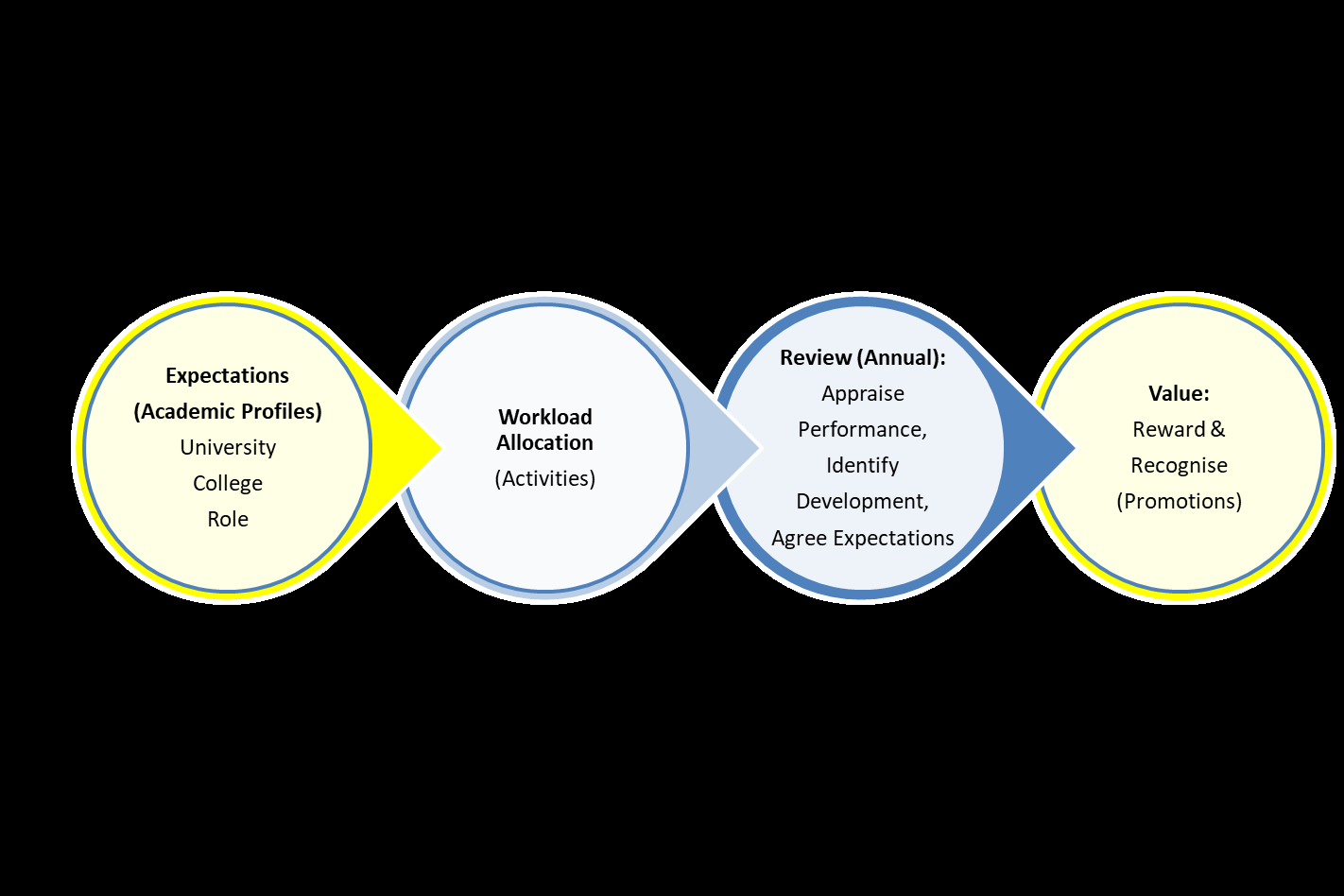
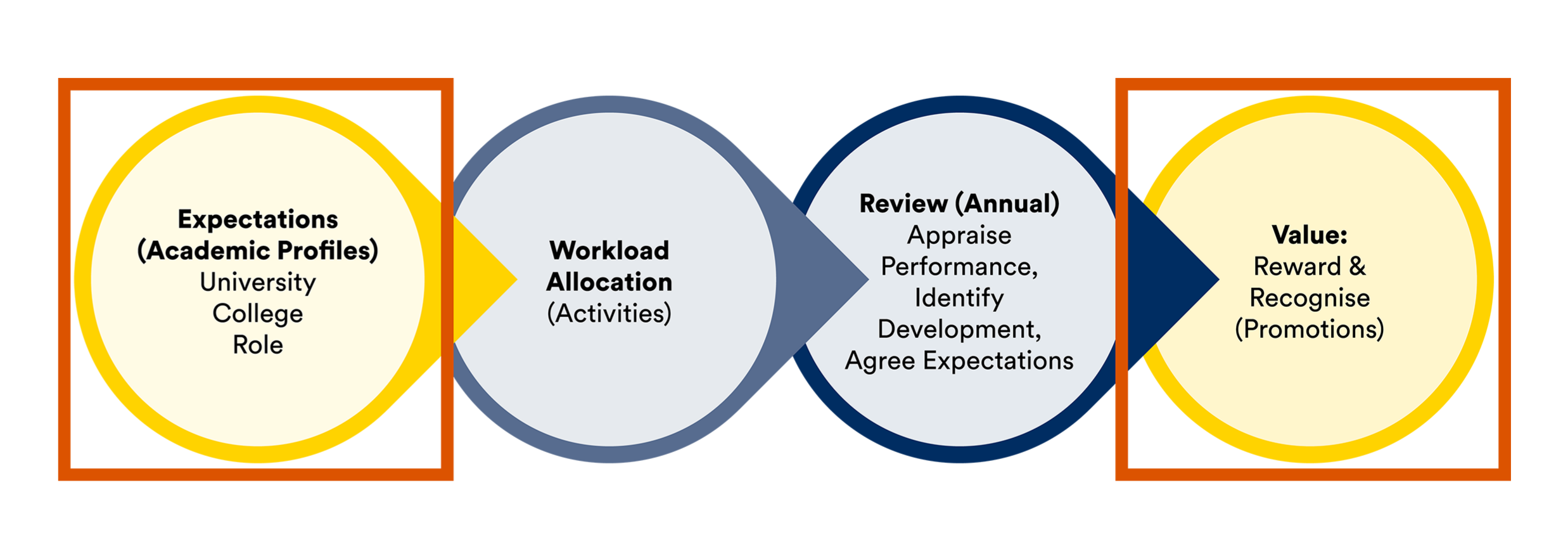
In late 2024, Flinders University commenced an initiative to develop a new Academic Career Framework (ACF), led by the Deputy Vice-Chancellor (Research).
This process was part of our ongoing efforts to enhance our academic ecosystem, a concept which was introduced by the Senior Deputy Vice-Chancellor in 2024.
The focus in 2024 was on the Workload Allocation element of the ecosystem, which saw the development of a new Academic Workload Model for use across the University.
During 2025, we have focused on two further components of the ecosystem to inform the development of a new ACF - Expectations (Academic Profiles) and Value (Promotions).
The development of a new ACF was driven by a commitment to ensuring that our academic profiles, promotion processes, and career development pathways reflect the evolving nature of academic work and the diverse contributions of our academic community.
Under the leadership of the Deputy Vice-Chancellor (Research), a dedicated ACF Committee was established to oversee and support the development of a new framework and its associated policy material.
Developed through sector benchmarking, excellence frameworks and staff input, the final framework was informed by staff feedback gained through a formal consultation process. Taking that feedback into consideration, our new ACF has been finalised by the ACF Committee under the leadership of the Deputy Vice-Chancellor (Research).
The Academic Career Framework (ACF) provides a new and more inclusive approach to recognising academic contributions across all levels and role types, to support diverse academic pathways. It also promotes clarity, consistency and fairness in academic progression. Revised and more contemporary academic profiles and indicators have been introduced, with a broader range of evidence pathways. The ACF also has an increased focus on leadership, innovation, impact and values.
In addition to the ACF, processes have been revised and simplified for the compilation and submission of promotion applications.

The final Academic Career Framework documents were developed through a structured, consultative process led by the Deputy Vice-Chancellor (Research) and supported by People & Culture. Between late 2024 and mid-2025, the framework was shaped through targeted focus groups, thematic analysis of feedback, and iterative drafting overseen by the ACF Committee. Formal consultation followed, with final endorsement by the ACF Committee, executive leadership and the Vice-Chancellor.
The Equivalence of Academic Staff Qualifications Policy and Procedures are under development and will be made available shortly.
Consideration of an Academic Career Framework was guided by the following principles:
To support the review, an Academic Career Framework (ACF) Committee was established in late 2024, chaired by the Deputy Vice-Chancellor, Research. The ACF Committee, and its supporting Working Group, oversaw and provided key inputs to the development of a proposed framework, and the preparation of material for consultation.
The review process itself involved a thorough internal review of existing academic profiles and promotion processes, and their associated policies and procedures. The aim was to design a new Academic Career Framework which would play a pivotal role in guiding and supporting academic careers at an individual level, as potential applicants for positions, promotion applicants, and for their own performance review process, but also as supervisors or mentors of other academic staff.
To inform an understanding of current policy and practice from a staff perspective, ten focus group sessions were undertaken (February - March 2025) to gain insights into the effectiveness of our current approaches and identify ways in which the introduction of an ACF could better support diverse career paths. The sessions included:
A diverse and invaluable range of feedback was gathered during focus group sessions. This feedback, along with insights from previous promotions processes, have been instrumental in shaping the development of a proposed ACF concept.
Some common themes emerging included:
Consultation occurred between 25 June and 23 July 2025 on the below 4 documents:
In accordance with clause 57 of the 2023 Enterprise Agreement (the EA), there will be an academic profile for each of the five (5) defined levels of appointment (Level A to E). Each Academic Profile includes the range of activities in which a staff member could be expected to be involved and the qualifications normally required of a staff member.
Academic Profiles provide the basis for the management of performance of academic staff including performance reviews [clause 27 of the EA - Performance Review and Development], incremental progression, probation [clause 63 of the EA – Probation], promotion [clause 69 of the EA – Academic Promotion] and recognition of exceptional performance.
The final ACF includes some clarification and revision of benchmarks and indicators where feedback indicated this was warranted, expanded recognition of the diversity of academic position/roles to ensure that non-traditional contributions are effectively captured, streamlined promotions processes, and stronger integration of leadership, innovation, impact and values. Relative to Opportunity (RtO) guidelines have also been developed to ensure that equity considerations are informed by clear and transparent principles.
All academic staff at Flinders University, including those in teaching specialist, research-only and teaching and research positions/roles.
The framework is built around Leadership, Innovation, and Impact. Staff are expected to demonstrate these qualities relative to their position/role and academic level.
The foundational principles for the development of the ACF were:
The ACF includes benchmarks and example indicators for each academic level (A–E). These are available in the full framework document.
It is expected that staff are able to demonstrate sustained excellence through positive contributions across relevant domains. ‘Sustained’ has been defined by the University as the culmination of professional growth that has occurred or been built on over time, with impact and outcomes that endure beyond an initial activity. Some achievements may be considered in themselves evidence of a culmination of professional growth and sustained leadership to that point, such as for a competitive grant or award. This guidance is also contained in the explanatory information in the Academic Career Framework document.
Yes. The ACF is a ‘whole of career’ framework intended for use in recruitment, appointment, induction, probation, performance reviews, and development planning - not just promotions.
Yes. This has been an important consideration for the University and three of the key principles (see FAQ above) guiding all considerations related directly to equity and inclusion. The University acknowledged feedback received from some staff through this process that increased transparency and equity of considerations would be welcomed. Several key changes can be seen from the new material, including:
Committee Members now prescribed under a Committee Terms of Reference. Members will include an Aboriginal and/or Torres Strait Islander member (internal or external to the University), representation to ensure inclusivity of expertise across academic domains, and consideration given to gender balance.
This depends on the context of your position/role, operational and strategic priorities, and the specific expectations of your position/role. Indicators for the level above your current academic level will also be important for consideration of development and readiness for promotion. Supervisors and staff are encouraged to discuss and identify relevant indicators during performance and development conversations.
We will be launching a new ACF Hub: A FAN-protected webpage providing all resources for academic promotions, including:
The Academic Career Framework (ACF) offers a contemporary approach that recognises a broader spectrum of academic contributions. It introduces an expanded range of evidence and recognition pathways, providing greater flexibility in how achievements and outcomes are acknowledged at each career level.
![]()
Sturt Rd, Bedford Park
South Australia 5042
CRICOS Provider: 00114A TEQSA Provider ID: PRV12097 TEQSA category: Australian University
Flinders University uses cookies to ensure website functionality, personalisation and a variety of purposes as set out in its website privacy statement. This statement explains cookies and their use by Flinders.
If you consent to the use of our cookies then please click the button below:
If you do not consent to the use of all our cookies then please click the button below. Clicking this button will result in all cookies being rejected except for those that are required for essential functionality on our website.